
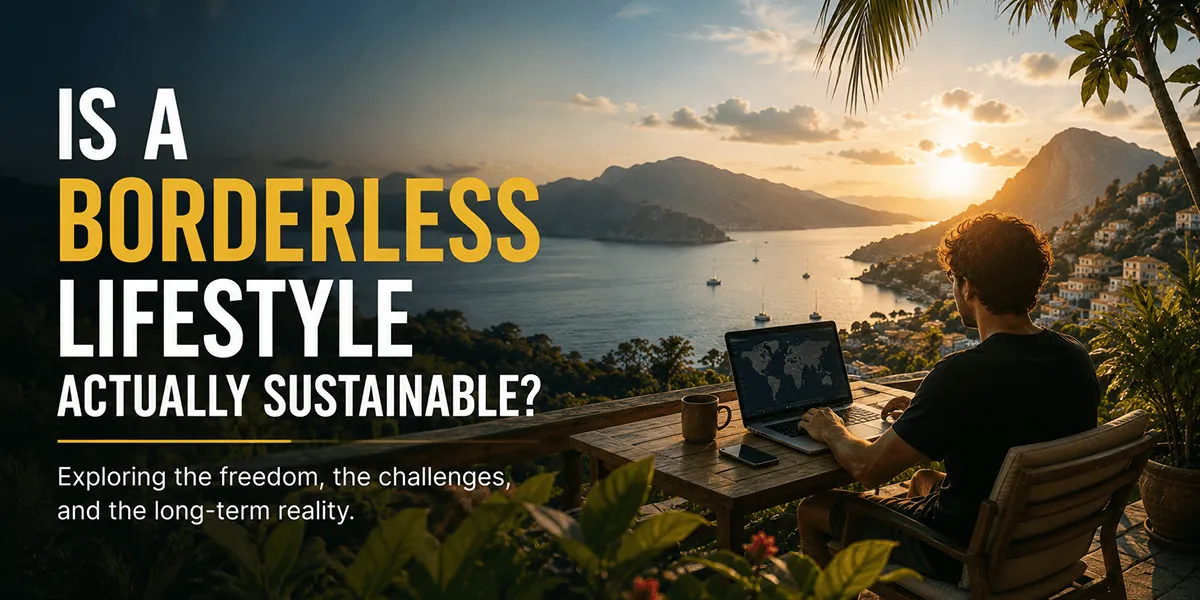
The idea of a borderless lifestyle has become increasingly popular over the past decade.
Remote work, global mobility, and international connectivity have made it possible for more people to live across countries in ways that would have been extremely difficult in the past.
But an important question remains: is this lifestyle actually sustainable long term?
For some people, absolutely. For others, constant movement eventually becomes exhausting.
A borderless lifestyle sounds exciting because it represents freedom, flexibility, exploration, reinvention, and independence. And those benefits are real.
Living internationally can expose people to new cultures, new business opportunities, different ways of thinking, improved quality of life, and broader perspectives.
But there are hidden costs too. Long-term international living can create challenges around:
- stability
- relationships
- long-term planning
- taxes
- healthcare
- residency compliance
- community
- identity
Some people eventually discover they do not actually want perpetual movement. They want optionality. There is a difference.
Many long-term expats eventually build hybrid lifestyles: multiple home bases, seasonal living, regional hubs, part-time travel, and flexible residency structures. The goal becomes balance rather than endless movement.
There is also a growing realization that “success” no longer needs to follow one standardized template.
For decades, many people were taught that life should follow a fixed sequence: education, career, house, retirement. Global mobility is changing how some people think about those assumptions.
People are experimenting with international entrepreneurship, remote income, cross-border families, decentralized careers, flexible living arrangements, and alternative residency structures.
Not because they are running away from life, but because they are trying to design one that fits them better.
A borderless lifestyle is not about avoiding responsibility or living permanently on vacation.
At its best, it is about creating more intentional choices about where and how you want to live.
And in a world becoming increasingly connected, more people are beginning to realize that those choices may be broader than they once imagined.